An independent real estate broker can offer experienced Chicago agents more control over commissions, branding, and daily operations. The right choice depends on your production, expenses, and goals.
If you already generate leads and close deals, your Chicago real estate brokerage should help you grow without creating unnecessary costs.
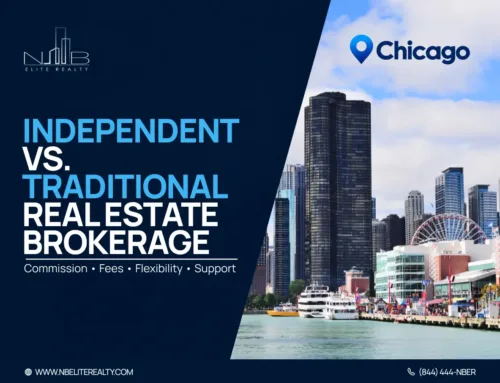
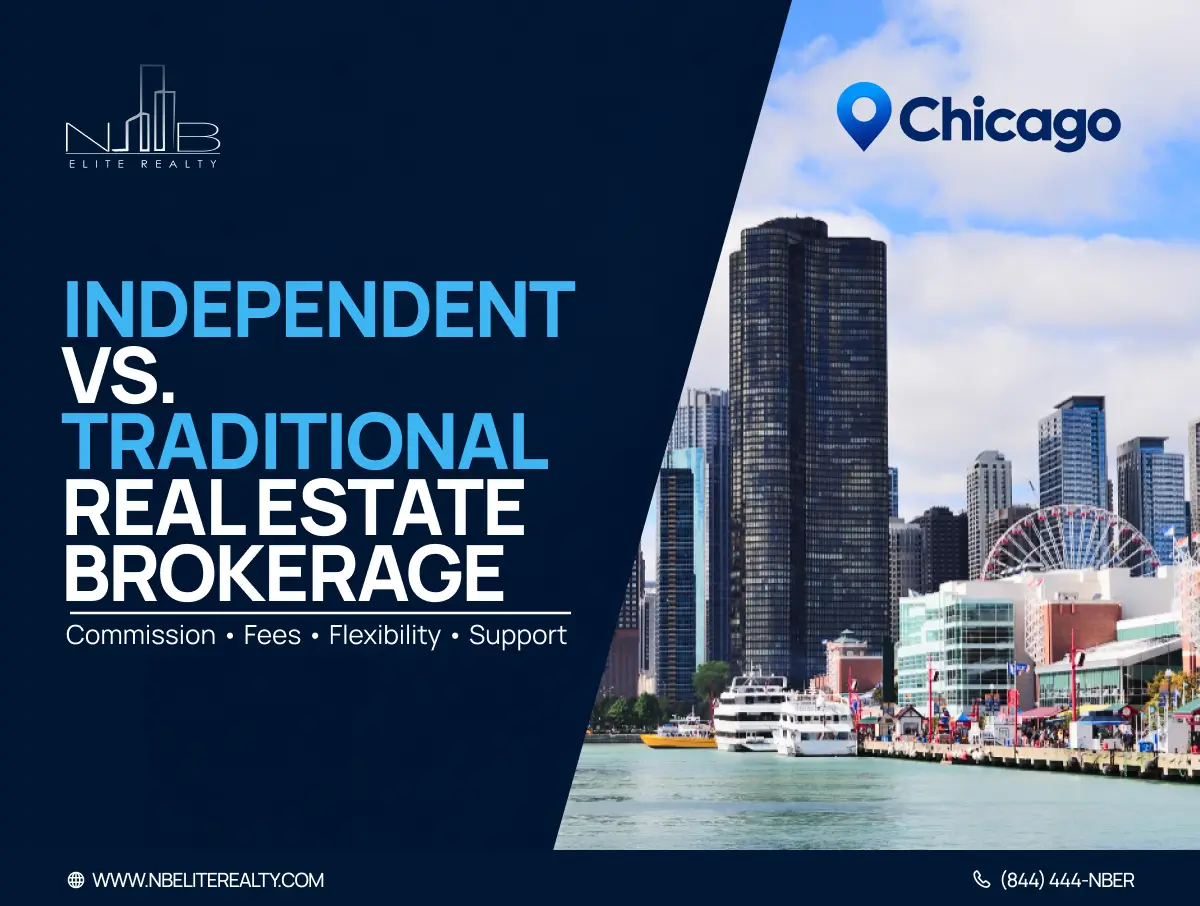
Independent vs. Traditional Real Estate Brokerages
Traditional brokerages often operate under established national or regional brands. In exchange for a commission split, agents may receive office space, training, marketing tools, and management support.
By contrast, an independent real estate broker may offer a leaner structure and more flexibility. Some firms let agents build their own brand, choose marketing tools, and keep a larger share of each commission.
Still, independence does not mean operating without supervision. Illinois agents must follow licensing and sponsorship requirements. You can review current rules through the Illinois Department of Financial and Professional Regulation.
How Commission Structures Differ
Your commission plan directly affects how much revenue remains after a closing. Traditional brokerages commonly use percentage splits. Independent models may offer higher splits or 100% commission plans with separate fees.
Consider a hypothetical $12,000 commission before brokerage charges:
- 70/30 split: The agent receives $8,400 before other expenses.
- 80/20 split: The agent receives $9,600 before other expenses.
- 100% commission plan: The agent receives $12,000 before transaction and brokerage fees.
However, no commission percentage tells the whole story.
A 100% commission real estate broker can be attractive to established agents. Even so, you should compare annual fees, per-transaction costs, and services before switching.
Brokerage Fees and Operating Costs
Every brokerage comparison should include the full cost of doing business. A low advertised brokerage fee may come with additional charges.
Ask about monthly or annual fees, transaction fees, desk fees, technology costs, insurance, and required memberships. Also check whether the brokerage charges for referrals or optional services.
For example, a firm with a lower commission split might cover more marketing expenses. Another firm might charge a flat real estate broker fee but let you choose your own vendors.
Instead of comparing one transaction, estimate your costs across an entire year. Use your typical sale price and realistic closing volume to make the comparison useful.
What Happens as Your Sales Volume Grows?
A commission split that feels manageable at five transactions may become costly when you close twenty. Estimate your annual expenses at different sales volumes, including flat fees, transaction charges, and optional services.
Then consider the time spent on contracts and marketing. A cheaper brokerage is not always better if limited support slows you down. Choose a model that scales with your production.
How Much Freedom Do Experienced Agents Get?
Experienced agents often have established referral networks and proven sales methods. Therefore, they may value autonomy more than basic sales training.
An independent real estate broker may give you additional flexibility over your schedule, lead generation, personal marketing, and team development.
Policies vary by brokerage, so ask which decisions remain yours.
For Chicago agents serving neighborhoods such as Lincoln Park, Lakeview, or the West Loop, local branding can matter. You need a brokerage that supports your client relationships while maintaining clear compliance standards.
Technology and Marketing Support
Useful services may include transaction management, electronic documents, contract review, marketing templates, and broker assistance.
Traditional brands sometimes offer large technology packages. Independent firms may provide essential tools while allowing agents to use their preferred CRM or advertising platforms.
Neither approach is automatically better. Check how quickly you can submit a contract, obtain guidance, and receive payment.
Also ask whether support is available when a closing becomes complicated. Reliable answers are more valuable than software you rarely use.
Why Chicago Market Experience Still Matters
Chicago agents serve different markets, from downtown condos to suburban homes and investment properties. Your brokerage should fit the transactions you handle most often.
Listing-heavy agents may value quick contract review and marketing freedom. Investors may prioritize education and deal support. Rather than choosing the longest feature list, identify the services that improve your clients’ experience and your efficiency.
Questions Chicago Agents Should Ask Before Switching
Before choosing an independent real estate broker, get clear answers to these questions:
- What will I pay each year? Include every fixed and transaction-based charge.
- How much commission will I keep? Ask about caps, referral fees, and exceptions.
- Can I keep my branding? Confirm rules for websites, signs, and social media.
- Who helps with contracts? Understand compliance review and broker availability.
- What happens to active deals? Clarify pending commissions and listing arrangements.
- How does the Illinois license transfer work? Confirm sponsorship steps and timing.
If you are planning a move, read our guide to transferring your real estate license.
How NB Elite Realty Combines Independence With Support
NB Elite Realty offers experienced agents a brokerage model built around 100% commission, practical support, and opportunities for long-term growth.
Instead of taking a percentage of every commission, NB Elite Realty uses separate brokerage and transaction fees. Its published brokerage FAQs list an annual brokerage fee of $350 upfront or $39 monthly. Standard transaction fees start at $299 and vary by sale price. Confirm the current terms for Illinois before joining.
Support includes BrokerSumo access, document compliance review, broker assistance, and regular educational webinars. Agents can also explore investment-focused education and team-building opportunities.
For a productive Chicago agent, this approach can balance business independence with dependable resources. You can focus on clients and closings while keeping a clear view of operating costs.
Find the Right Chicago Brokerage for Your Business
Choosing between a traditional brokerage and an independent real estate broker is not just about commission percentages. You should also consider fees, flexibility, technology, and people you can rely on.
If you are ready to evaluate a 100% commission model, explore NB Elite Realty’s agent opportunities. Review the terms, ask questions, and decide whether the brokerage fits your next stage of growth.

Or call (844) 444-NBER to learn more.